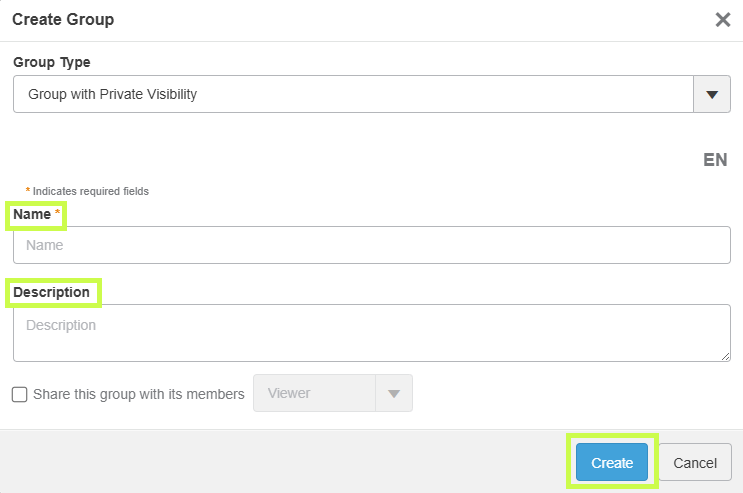
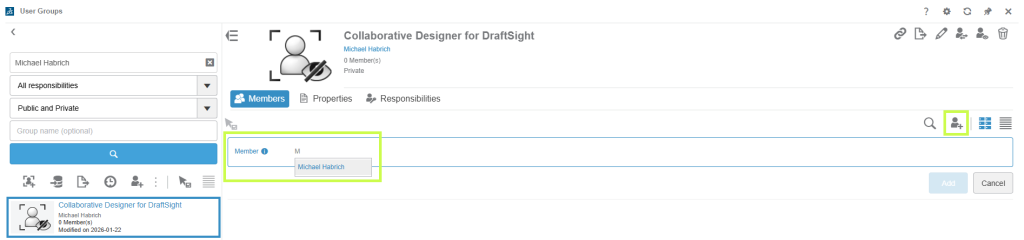
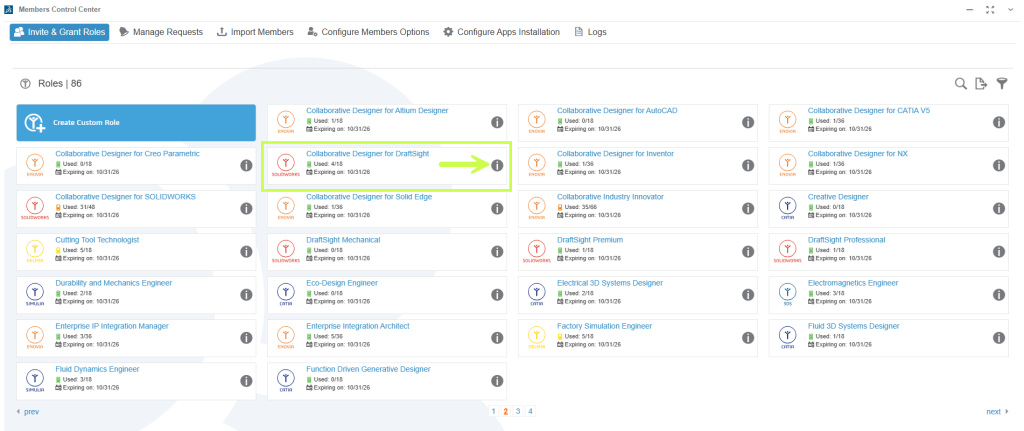
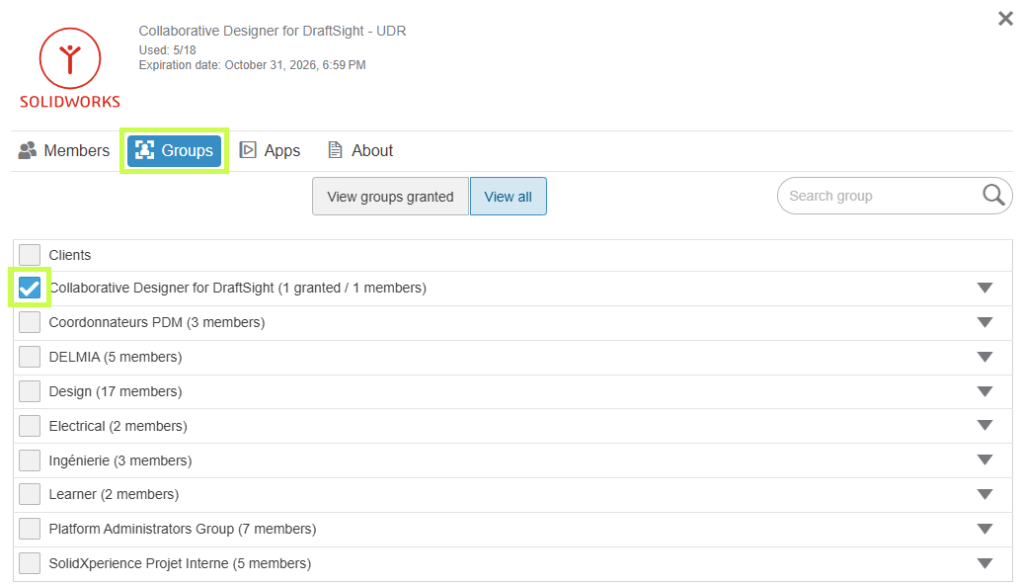
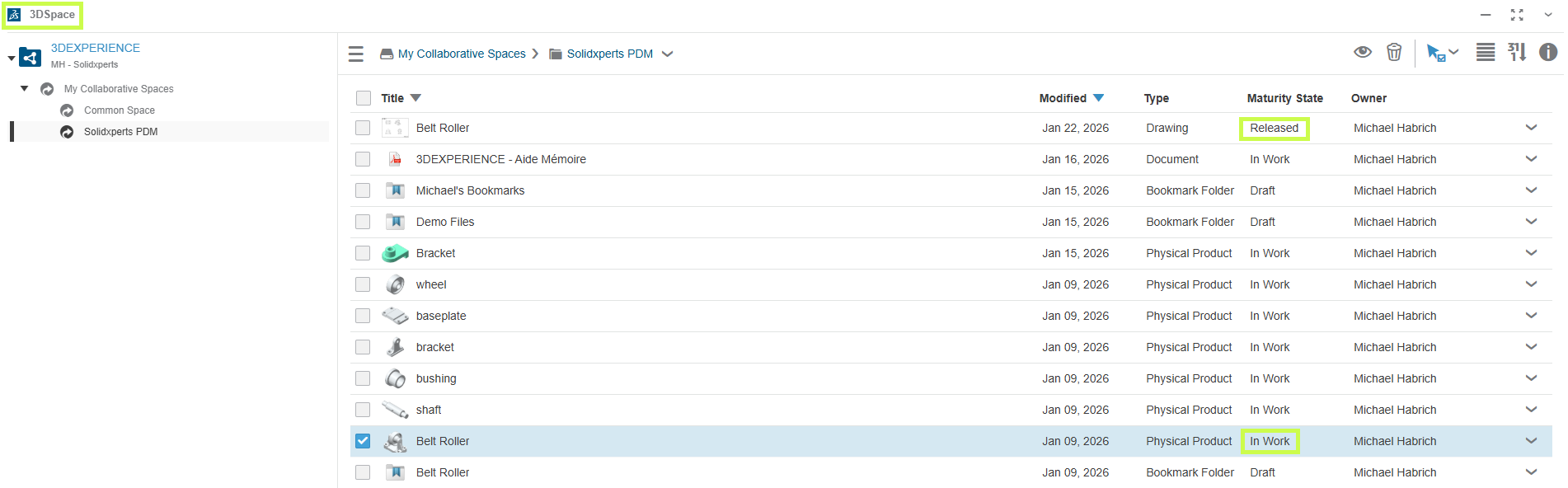
Connecting SOLIDWORKS Desktop to the 3DEXPERIENCE Platform

BLOG

Connecting SOLIDWORKS Desktop to the 3DEXPERIENCE Platform

The 3DEXPERIENCE platform includes a wide range of powerful, web-based apps, but many teams prefer to continue designing in the familiar SOLIDWORKS desktop environment. The good news? You don’t have to choose one or the other.

By combining SOLIDWORKS desktop with the Design with SOLIDWORKS connector, you can keep your existing workflows and interface while taking full advantage of cloud-based file storage, sharing, and collaboration.

In this article, we’ll walk through:

  • Installing the Design with SOLIDWORKS connector

  • Launching SOLIDWORKS with the 3DEXPERIENCE connection enabled

  • Saving files directly to the platform

  • Managing your local cache for best performance

Installing Design with SOLIDWORKS

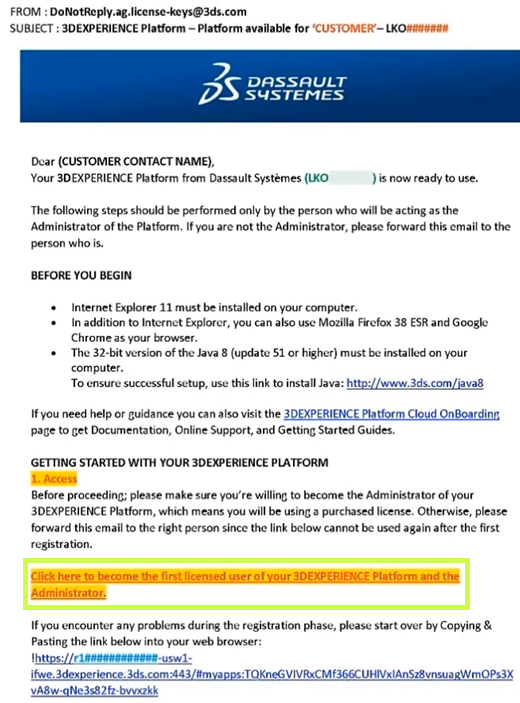
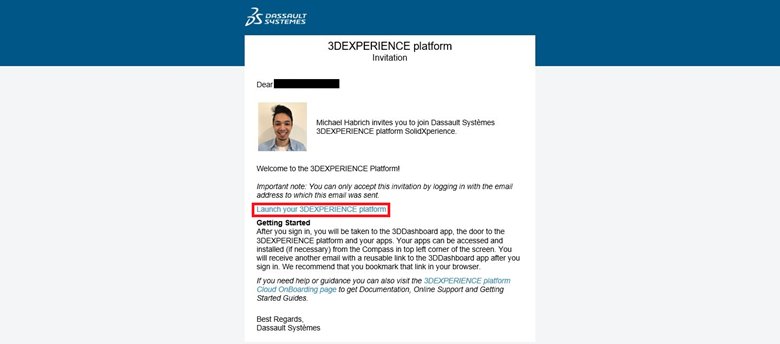
First, once your 3DEXPERIENCE tenant is activated, or you’ve been invited to an existing one , linking SOLIDWORKS desktop to the platform is quick and straightforward.

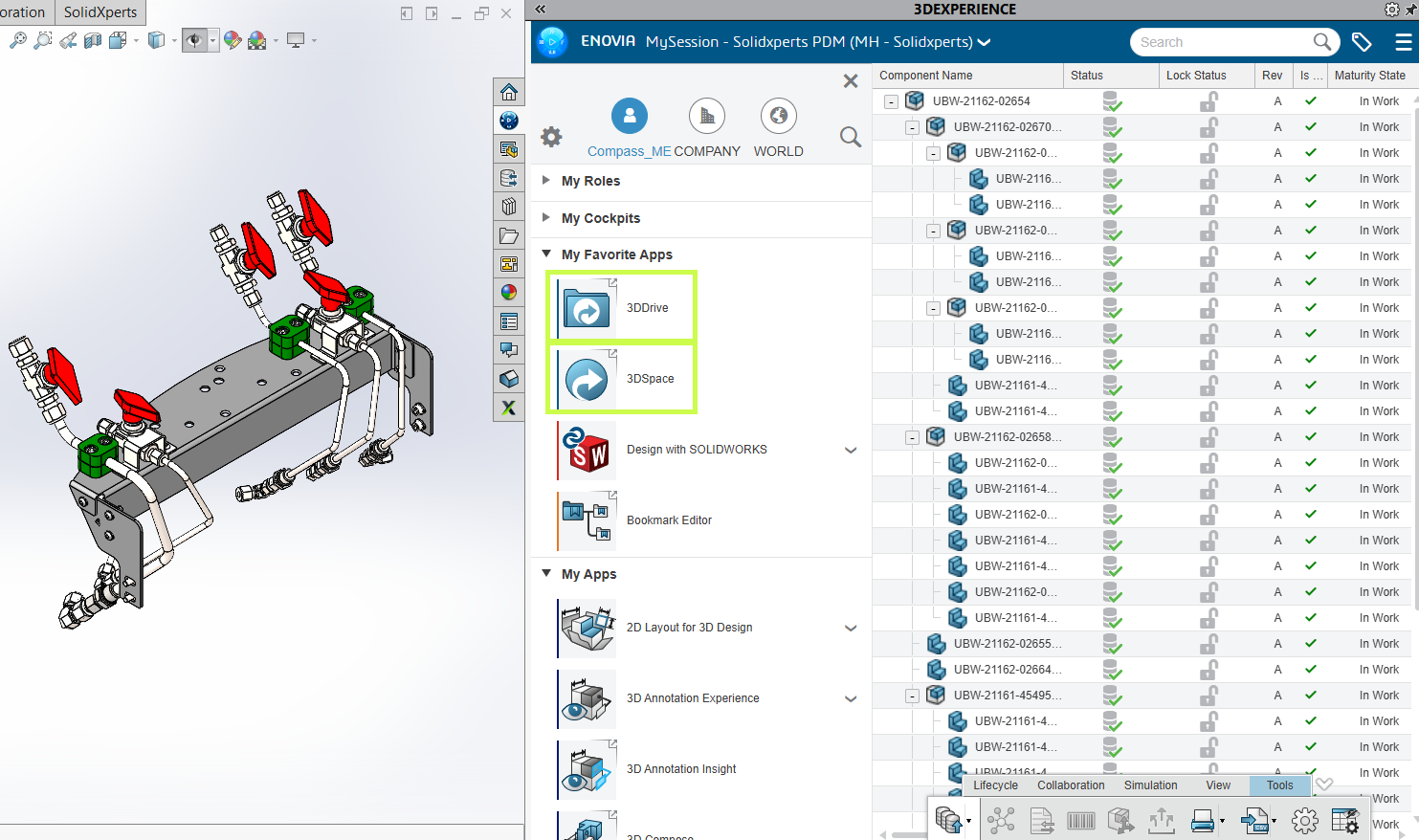
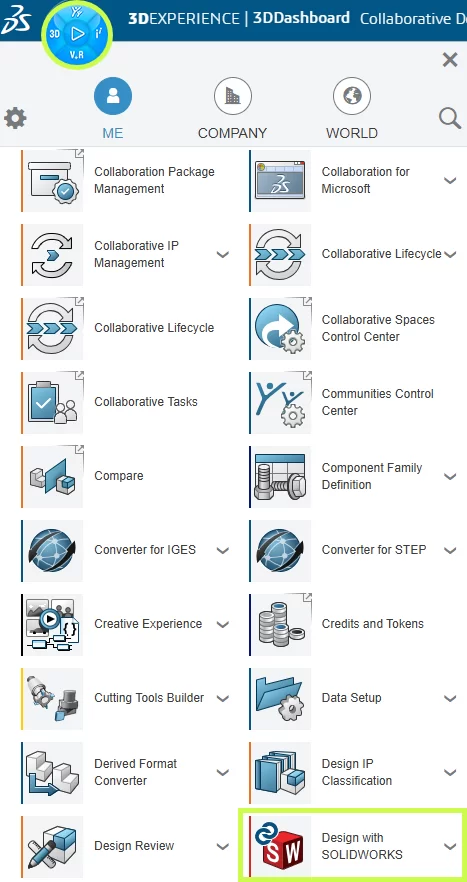
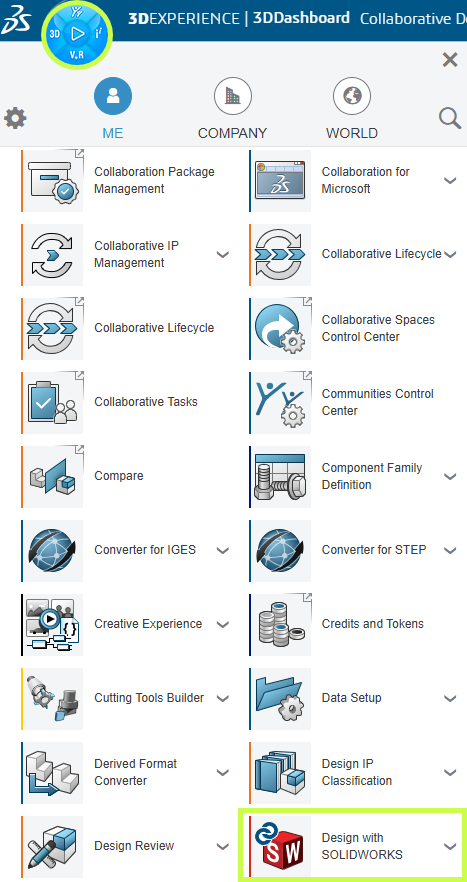
  1. In the 3DEXPERIENCE interface, click the Compass icon in the upper-left corner.

  2. Scroll down to My Apps and locate Design with SOLIDWORKS.

  3. Select the app to begin the installation.

Installing Design with SOLIDWORKS

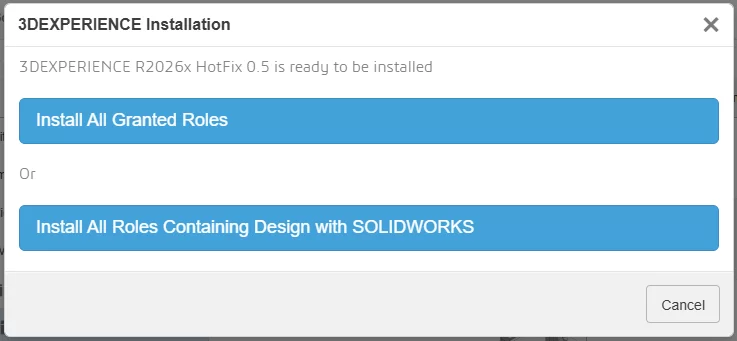
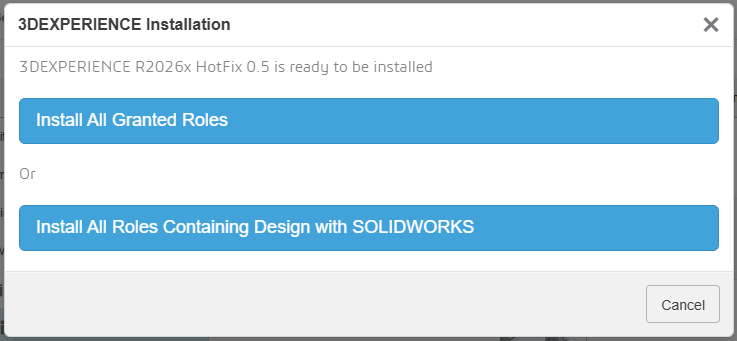
During installation, you’ll be prompted to:

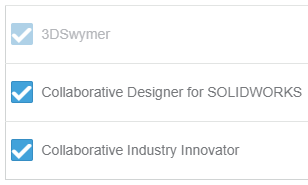
  • Install all granted roles, or

  • Install only the roles required for the Design with SOLIDWORKS connector

Installing Design with SOLIDWORKS

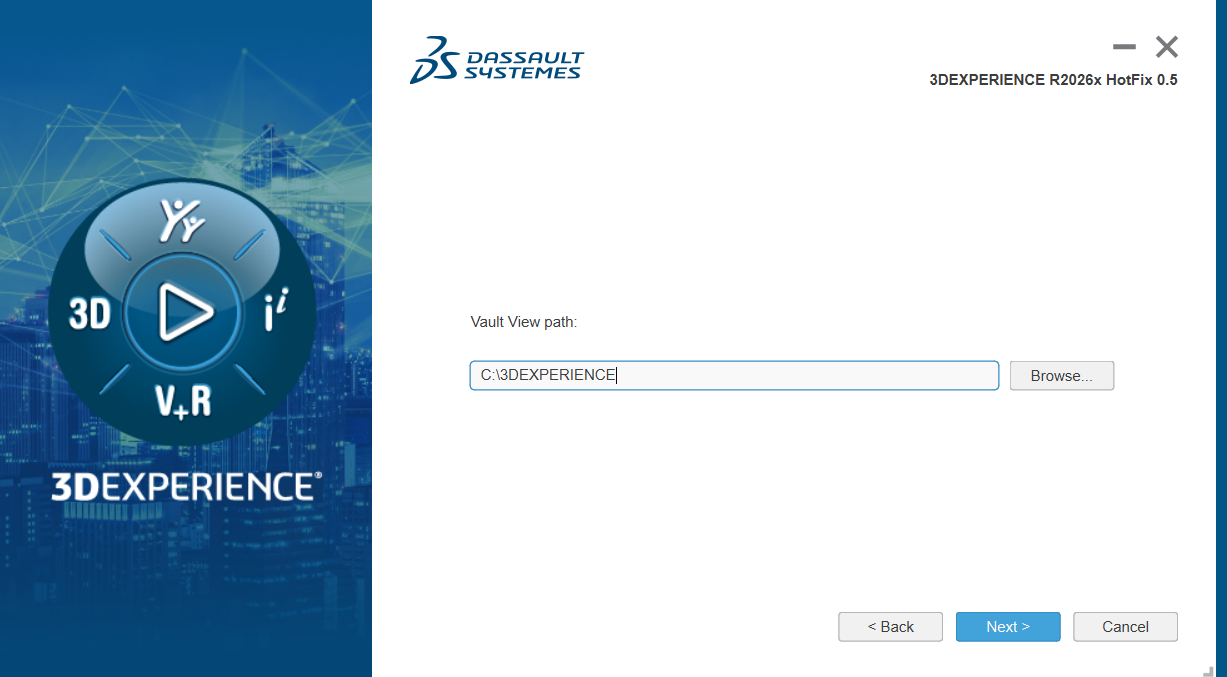
The installer will then allow you to choose:

  • The installation directory

  • The location of your 3DEXPERIENCE cache

By default, the cache is stored in C:\3DEXPERIENCE. Since the cache is managed directly from within SOLIDWORKS, you typically won’t need to access this folder manually.

The cache is stored in C:\3DEXPERIENCE

Once installation is complete, the connector is added to your system.

Enabling the 3DEXPERIENCE Add-In in SOLIDWORKS

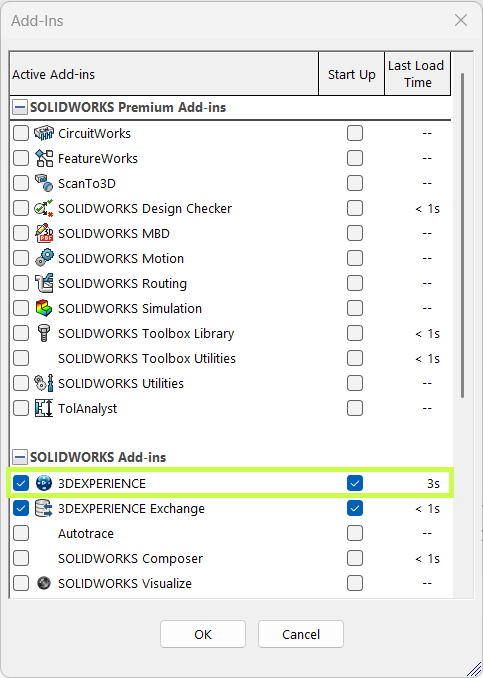
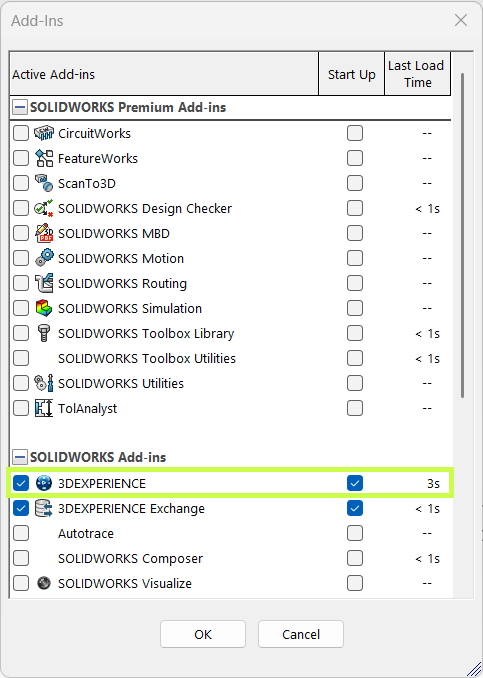
Before using the connector, take a moment to confirm the 3DEXPERIENCE add-in is enabled in SOLIDWORKS.

  1. Launch SOLIDWORKS.

  2. Go to Settings > Add-Ins.

  3. Verify that the 3DEXPERIENCE add-in is installed and checked.

Enabling the 3DEXPERIENCE Add-In in SOLIDWORKS

This ensures SOLIDWORKS can communicate properly with the platform.

Launching SOLIDWORKS with the Connector

One important workflow change to be aware of is how you launch SOLIDWORKS.

  • Launching SOLIDWORKS from a desktop shortcut or system search opens the standard desktop version without the 3DEXPERIENCE connection.

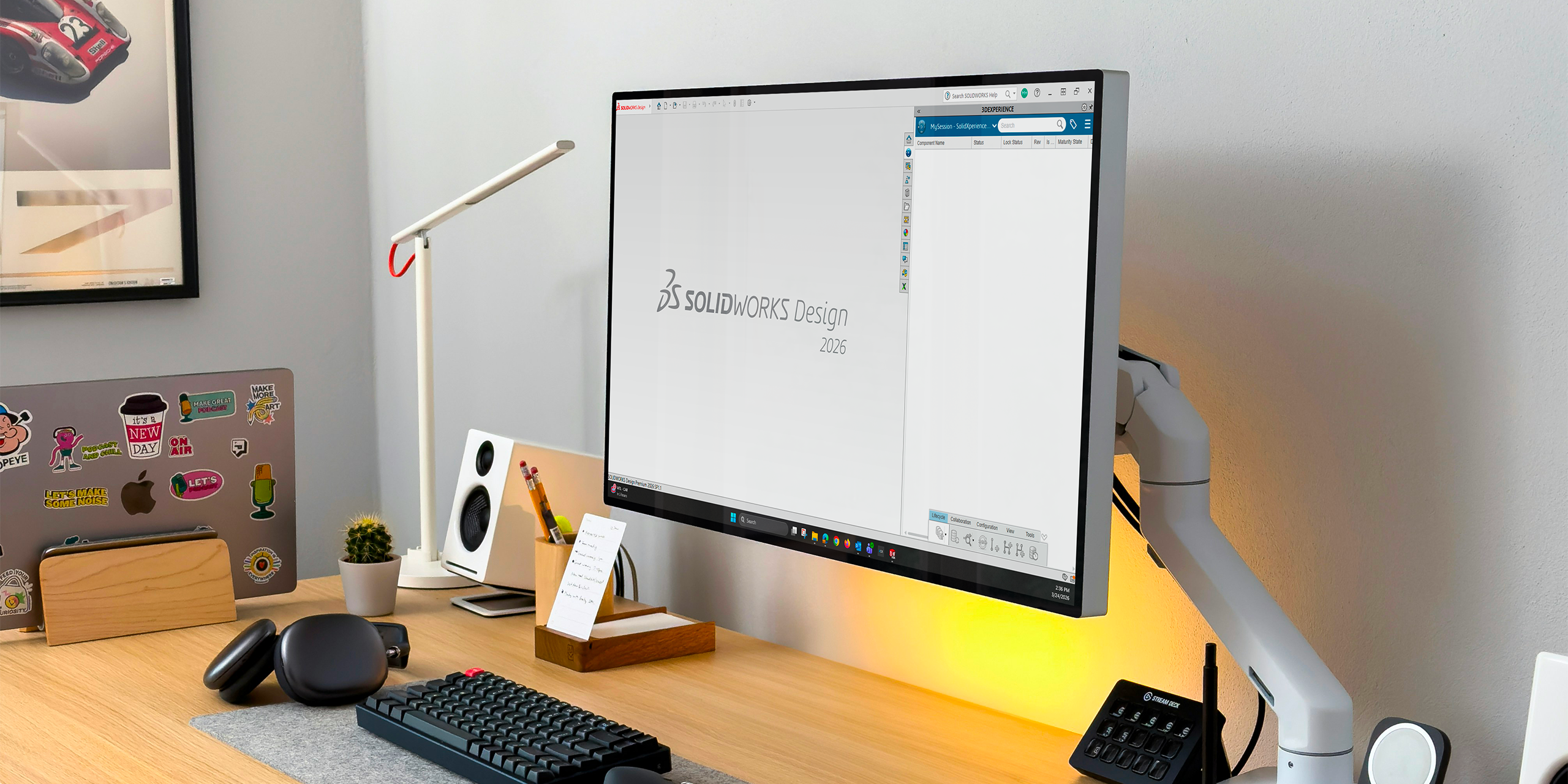
  • To use the connector, launch Design with SOLIDWORKS instead.

This starts SOLIDWORKS with full 3DEXPERIENCE functionality enabled.

You can also:

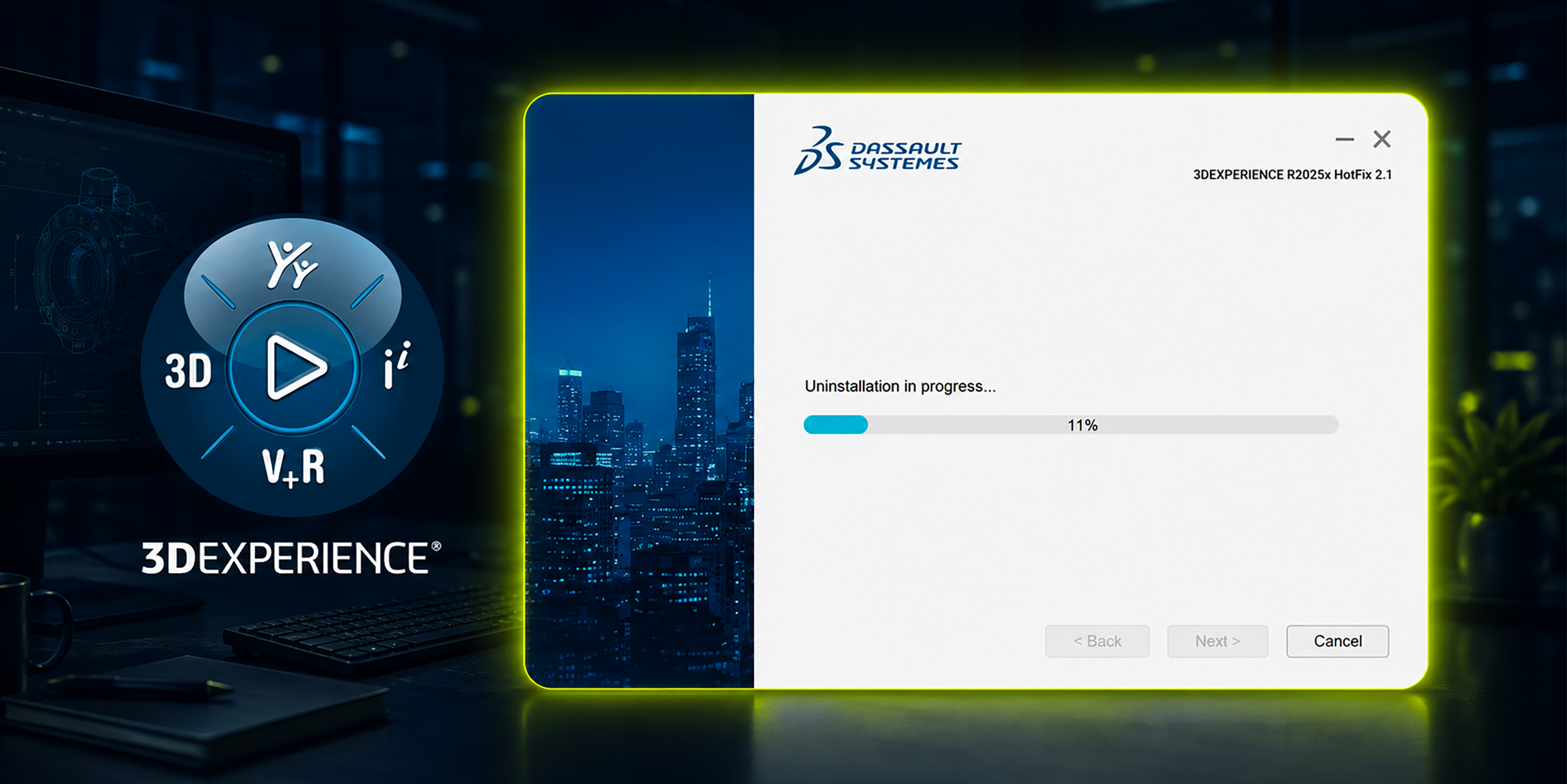
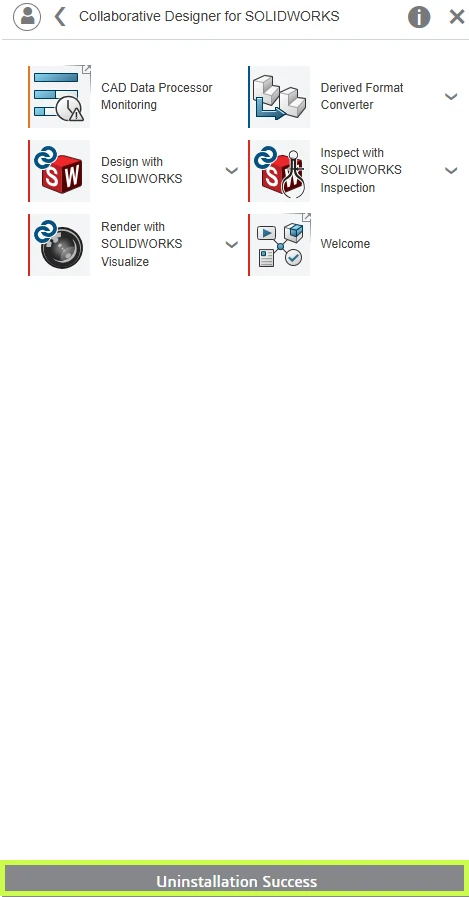
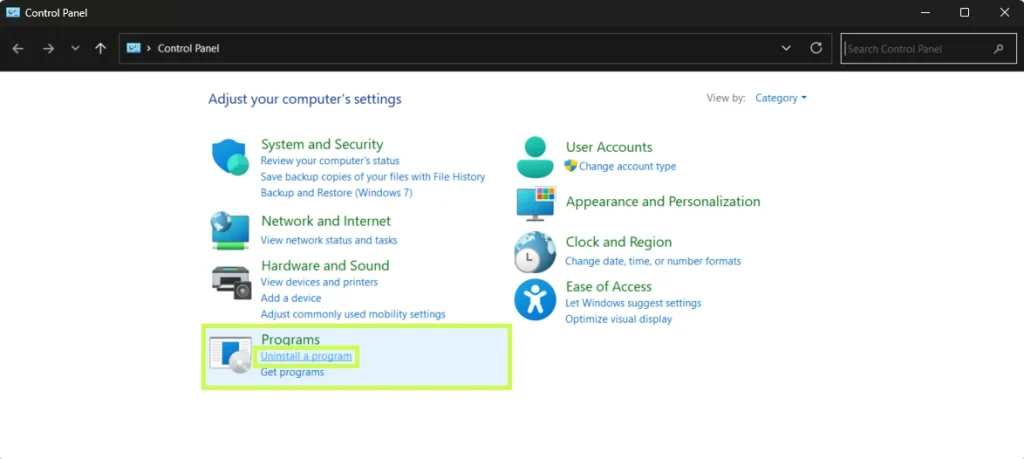
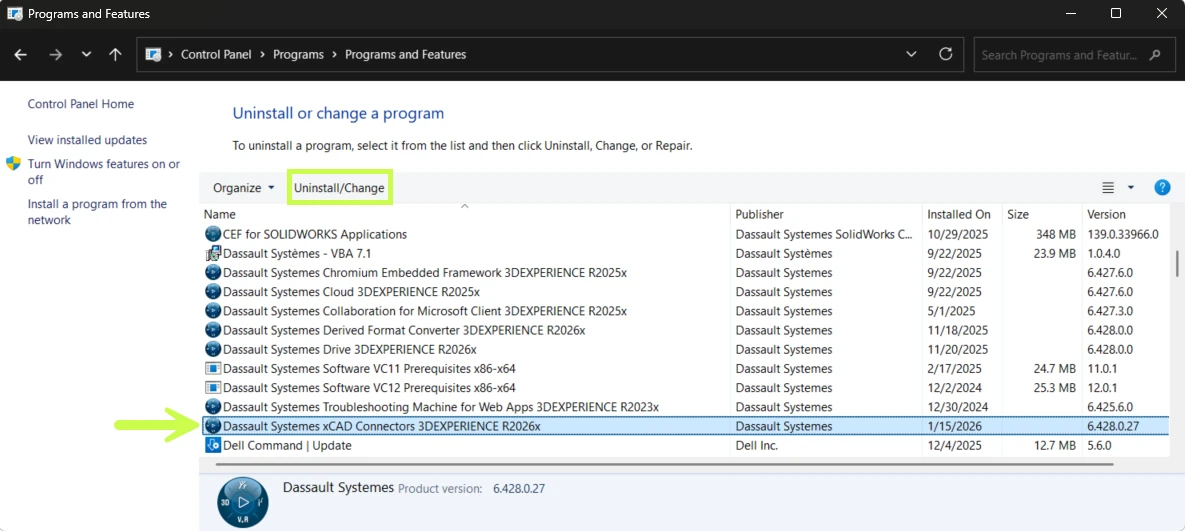
  • Use the dropdown next to Design with SOLIDWORKS to check for updates or uninstall

  • Create a dedicated desktop shortcut for Design with SOLIDWORKS, allowing you to access cloud functionality without opening a web browser

Launching SOLIDWORKS with the Connector

Saving Files to the 3DEXPERIENCE Platform

Once connected, saving files to the cloud is seamless.

You can:

  • Use Save to 3DEXPERIENCE from the File menu (alongside Save and Save As), or

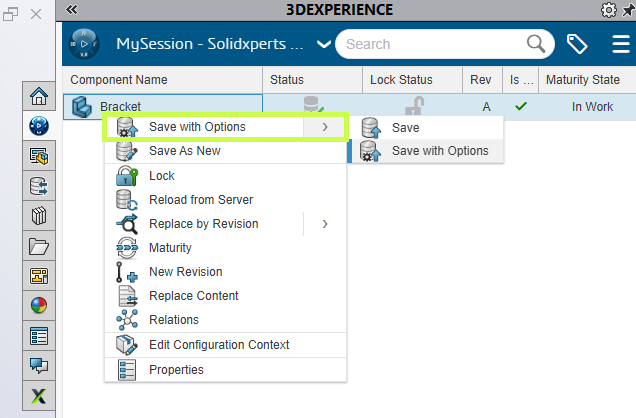
  • Use the 3DEXPERIENCE Task Pane, added by the add-in

The task pane lets you:

  • Browse your tenant

  • Search for existing data

  • Right-click and save files directly to the platform

And if needed, you can still save files locally, the connector doesn’t force you into a cloud-only workflow.

Saving Files to the 3DEXPERIENCE Platform

Managing the 3DEXPERIENCE Cache

When you open or edit files stored on the platform, they’re downloaded locally to your 3DEXPERIENCE cache. Keeping this cache clean can significantly improve performance.

The 3DEXPERIENCE add-in makes cache management easy:

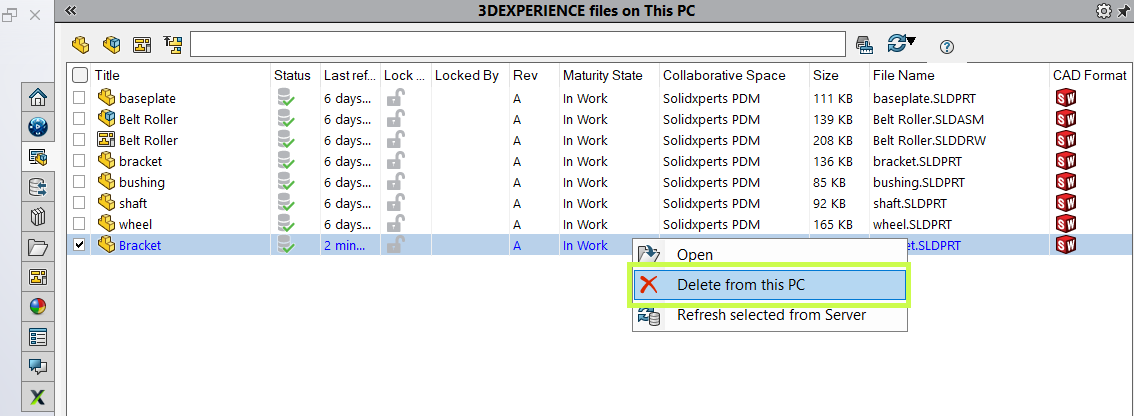
  • Delete individual cached files

  • Use the cleanup tool to remove files older than a specified date

The cleanup utility is smart. It automatically skips:

  • Files referenced by assemblies

  • Files not yet saved to the platform

  • Files that are currently locked

This helps you clear space without risking your data.

Saving Files to the 3DEXPERIENCE Platform

Final Thoughts

The Design with SOLIDWORKS connector bridges the gap between SOLIDWORKS desktop and the 3DEXPERIENCE platform, giving you the best of both worlds. You get cloud-based collaboration and data management without changing how you design.

If you need help installing the connector, optimizing your workflow, or rolling this out to your team, your Solidxperts team is here to help.

Looking to learn more?

  • Explore additional articles and tutorials

  • Connect with other users and experts

  • Or reach out to us! We’re always happy to help you get the most out of your tools


Michael Habrich

3DEXPERIENCE Specialist

X_green_halo

Any questions? Need help? Ask one of our experts.

Whether you’re ready to get started or just have a few more questions, you can contact us toll-free:

    7 Myths About AI: Demystifying Bias and Technological Limits

    BLOG

    7 Myths About AI: Demystifying Bias and Technological Limits

    Every wave of innovation in artificial intelligence (AI) brings real technological progress, along with a dramatic rise in hype. With every breakthrough, new narratives emerge: AI is portrayed as “magical,” endowed with its own will, on the verge of becoming superhuman, or conversely as something completely uncontrollable by law.

    As a result, this fog of myths makes AI opaque to the public, complicates decision-making for organizations, and distracts attention from the real technical and societal challenges.

    In this article, we aim to clarify two key questions:

    • What are the main myths currently surrounding AI?

    • And what technical, physical, and social realities help dismantle them?

    The Major Myths Shaping Our View of AI

    Several myths structure today’s collective imagination about artificial intelligence.

    “AI has agency.”
    The idea that AI systems act on their own initiative, with intentions, goals, or desires.

    “Superintelligence is imminent.”
    The belief that we are only a few years, or even months, away from a general intelligence far surpassing human capabilities.

    “AI can be objective or impartial.”
    The assumption that algorithms are inherently neutral because they rely on computation.

    “AI has a clear definition.”
    As if AI referred to a single, clearly defined technology, when in reality no universal definition exists.

    “Ethical guidelines are enough to protect us.”
    The perception that voluntary ethical charters are sufficient safeguards against harmful AI uses.

    “AI cannot be regulated.”
    The claim that technological innovation moves too fast for legal systems to keep up.

    “AI can solve any problem.”
    The idea that AI is a universal solution applicable to any technical, economic, or social challenge.

    In reality, these myths stem from a mixture of marketing, science fiction, and technical misunderstanding. To move beyond them, we need to return to what AI actually is today.

    1. Agency and Consciousness: AI as a “Stochastic Parrot”

    One of the most common misconceptions is attributing intention to AI. We often talk about what AI “wants,” “decides,” or “thinks.” Yet modern systems, especially large language models (LLMs), function much more simply.

    Models That Predict, Not Understand

    An LLM does not interpret your sentences in the human sense. Technically, it:

    • receives a sequence of tokens (pieces of words) as input

    • computes a probability distribution over the next token using a trained neural network

    • selects or samples the next token according to this distribution

    • repeats the process until a complete response is produced

    This mechanism relies on massive statistical correlations learned during training. At no point does the system possess:

    • semantic understanding of concepts

    • an internal model of the world comparable to a human’s

    • independent intentions or goals

    In other words, what researchers sometimes call a “stochastic parrot”: a machine that reproduces learned language structures in sophisticated probabilistic combinations.

    Anthropomorphism as a Persistent Bias

    If these systems appear to “think,” it is largely because humans naturally anthropomorphize systems that display seemingly intelligent behavior. This cognitive bias is central to many misunderstandings about AI today.

    2. Superintelligence and the Resource Wall

    Another dominant narrative suggests that we are on the verge of general superintelligence, held back only by corporate caution. However, the actual infrastructure behind AI tells a different story.

    The Data Wall: A Finite Resource

    Today’s large models rely on enormous volumes of high-quality human-generated data: text, conversations, code, and multimedia content. But this resource is not infinite.

    Estimates suggest that high-quality training data suitable for ever-larger models could be largely exhausted between 2026 and 2032. Beyond that point:

    • existing datasets would be reused repeatedly, yielding limited improvements

    • or synthetic data would be used, introducing new risks and feedback loops

    Physical Constraints and Diminishing Returns

    The idea of unlimited growth in model power faces several practical limits.

    Energy and cooling constraints
    The computing density required for training and deploying the largest models pushes data centers toward limits in:

    • electrical grid capacity

    • cooling infrastructure needed to dissipate heat

    Hardware limits
    GPUs and other accelerators are approaching physical limits in terms of performance per watt and cost efficiency.

    Diminishing returns
    Scaling models by increasing parameters, data, or compute still improves performance, but each additional gain becomes smaller relative to the resources invested.

    These “resource walls” do not prevent progress, but they challenge the idea of a straightforward path toward limitless superintelligence.

    3. Objectivity and Impartiality: AI as a Mirror of Human Bias

    AI is often presented as a way to eliminate human bias. In reality, AI systems frequently inherit and sometimes amplify existing inequalities.

    Data Bias: Who Is Represented?

    Models can only generalize effectively if training data represent a sufficiently diverse set of situations and populations.

    When datasets are imbalanced, performance degrades unevenly. Studies have shown, for instance, that some facial recognition systems exhibit error rates up to 35% higher for darker-skinned women than for white men.

    This is not an isolated bug. It reflects underlying representation biases in the data.

    Design Bias: Optimization Choices Matter

    Even with balanced datasets, models reflect the priorities of their designers:

    • How is overall accuracy balanced against fairness between groups?

    • Which metrics are optimized during training and deployment?

    • What trade-offs are accepted between false positives and false negatives?

    These decisions directly shape who benefits from an AI system and who may be harmed. Claims of algorithmic objectivity often overlook these design choices.

    4. The Plural Architecture of AI

    Contrary to popular belief, “artificial intelligence” does not describe a single unified technology. Instead, it is an umbrella term covering a broad and heterogeneous set of methods, theories, and applications.

    A Hierarchy of Often-Confused Concepts

    Many people use AI, Machine Learning, and Deep Learning interchangeably, although they represent different levels of abstraction.

    Artificial Intelligence (AI)
    The broader field of computer science focused on creating systems capable of performing tasks that require human-like cognitive abilities.

    Machine Learning (ML)
    A subset of AI in which systems learn patterns from data rather than relying solely on explicit programming.

    Deep Learning (DL)
    A specialized ML approach using multi-layer neural networks to process complex data such as images, speech, or language.

    Divergent Definitions

    The meaning of AI changes depending on perspective.

    • Scientific definition: a research discipline exploring computational models of cognition.

    • Technological definition: systems capable of perceiving their environment and taking actions accordingly.

    • Popular definition: a largely anthropomorphic vision attributing awareness or autonomy to machines.

    A Fragmented Ecosystem

    AI is not monolithic. It includes multiple research traditions and technical approaches.

    Two historical families illustrate this diversity:

    Symbolic AI
    Systems based on logical rules and expert knowledge.

    Connectionist AI
    Statistical approaches based on large datasets and neural networks, including modern language models.

    Narrow AI vs General AI

    Today’s systems belong entirely to narrow AI, designed to perform specific tasks such as:

    • playing chess

    • recognizing objects in images

    • detecting fraud

    • generating text

    Artificial General Intelligence (AGI), capable of learning any intellectual task a human can perform, remains a speculative concept.

    5. Ethics, Marketing, and the Need for Regulation

    In response to AI risks, many organizations have adopted ethical charters and voluntary guidelines. While useful, these tools have clear limitations.

    Ethical Marketing

    Without enforcement mechanisms, many ethical charters function more as reputation tools:

    • they reassure stakeholders

    • they improve brand image

    • but they rarely prevent high-risk systems from being deployed

    Toward Enforceable Regulation: The EU AI Act

    Contrary to the myth that AI cannot be governed, regulatory frameworks are emerging.

    The European Union’s AI Act proposes a risk-based approach:

    • Unacceptable risk systems are banned

    • High-risk systems must comply with strict requirements including transparency, traceability, documentation, conformity assessments, and human oversight

    • Minimal risk systems face limited regulation

    The goal is not to slow innovation, but to ensure that AI systems remain accountable within existing legal frameworks.

    6. AI Is Not a Magic Wand

    Perhaps the most persistent myth is that AI can solve any problem.

    In reality, successful AI systems are:

    • specialized, designed for specific tasks such as image recognition, text summarization, fraud detection, or code generation

    • limited in common sense, often failing when faced with situations outside their training distribution

    • highly context-dependent, relying on data quality, system integration, and human oversight

    The same model may perform extremely well in a well-defined environment yet fail dramatically when conditions change or when real-world usage diverges from intended scenarios.

    AI as a Component, Not a Strategy

    For organizations, AI should be viewed as:

    • a technical component within a larger system architecture

    • integrated into a broader strategy involving governance, metrics, risk management, and human supervision

    The wrong question is:

    “How can we add AI everywhere?”

    The better question is:

    “On which well-defined problems does AI provide a real advantage compared to existing solutions?”

    Moving Beyond the Myths

    Today’s AI is neither a conscious entity, nor an imminent superintelligence, nor a universal solution.

    It is a set of powerful techniques deeply grounded in real-world constraints. These systems are limited by physical infrastructure such as energy, cooling, and hardware, as well as by the availability of data and computational resources. They are also shaped by the social structures and human biases embedded in the data and objectives guiding their development.

    By dismantling the myths surrounding AI, autonomous agency, imminent superintelligence, perfect objectivity, legal ungovernability, or universal applicability, we can ask better technical questions, design safer systems, and build more effective regulatory frameworks.

    Ultimately, understanding these realities allows us to treat AI for what it truly is: a powerful but specialized tool that must be used with rigor, transparency, and human oversight.

    If you have questions about AI and its practical applications, our experts are here to help. Contact us to start the conversation.


    Benoit Bilodeau

    Senior Solutions Architect

    X_green_halo

    Any questions? Need help? Ask one of our experts.

    Whether you’re ready to get started or just have a few more questions, you can contact us toll-free:
      Updated Instructions for Adding the Thumbnail Column in the 3DEXPERIENCE Platform

      BLOG

      Updated Instructions for Adding the Thumbnail Column in the 3DEXPERIENCE Platform

      If you use the Bookmark Editor inside the 3DEXPERIENCE platform, the Thumbnail column can be a great way to quickly recognize your content without digging through details. With the July 2025 update, the way you add this column (and a few others) has changed a little. No worries, we will walk you through it.

      Bookmark Editor

      Creating a Custom View

      To add the Thumbnail column, you’ll now need to work with a custom column view instead of the default one.

      • Right-click any column header in Bookmark Editor.
      • Select Table Preferences.

      Table Preferences in the 3DEXPERIENCE platform

      You’ll see a dropdown at the top. Most users will currently be using Default.

      • Click the + icon to create your own view.
        • The platform will call it Copy of Default view by default.

      Edit Preferences

      • Rename it to something meaningful, maybe “My Thumbnail View”,and click the checkmark to confirm.

      Adding the Thumbnail Column

      You’ll now see two panels: Available Columns and Selected Columns.

      • Use the search bar or browse the list to find Thumbnail.
      • The Thumbnail column is located under Common Attributes.
      • Select it, then click the right-arrow to add it to your selected list.

      Adding the Thumbnail Column

      Adding the Thumbnail Column in the 3DEXPERIENCE platform

      Once it’s added:

      • Drag and drop the column to adjust its position, or
      • Use the up/down arrows to move it into place.

      If you’d like it to stay visible while scrolling, use Pin Left.

      Click Save when you’re done.

      Switching Between Views

      If you create more than one custom layout (or want to go back to the original):

      • Right-click any column header
      • Go to Table Views
      • Choose the view you’d like to use

      Switching Between Views

      Done! Your Bookmark Editor now includes visual thumbnails, making it easier to browse, recognize, and manage your data at a glance.

      Your Bookmark Editor now includes visual thumbnails

      Want More 3DEXPERIENCE  Platform Tips?

      We love helping teams get the most out of their tools.
      If you’d like to go a bit further:

      • Explore more tutorials on our YouTube channel;
      • Join a training;
      • Or reach out! We are always happy to share best practices and workflows.

      Your platform should feel like it’s working for you. And we’re here to make sure it does!


      Michael Habrich

      3DEXPERIENCE Specialist

      X_green_halo

      Any questions? Need help? Ask one of our experts.

      Whether you’re ready to get started or just have a few more questions, you can contact us toll-free:
        Creating Custom Attributes in 3DEXPERIENCE

        BLOG

        Creating Custom Attributes in 3DEXPERIENCE

        Sometimes the standard attributes in 3DEXPERIENCE just aren’t enough. Maybe you need a custom field to track a project code, client name, or any other detail that’s specific to your workflow. The good news? You can create your own attributes in just a few steps — and we’ll show you how.

        Before You Start

        To build custom attributes, you’ll need:

        • Administrative privileges on your platform

        • The Platform Manager role assigned to your profile

        Platform Manager

        Once that’s in place, you’re ready to go.

        Step 1: Open Attributes Management

        1. Select the Platform Management role.

        2. Head into the Collaborative Spaces Control Center.

        3. From there, choose Attributes Management.

        Create a Collaborative Space

        C’est ici que toute la personnalisation prend forme.

        This is where all the customization magic happens.

        Step 2: Find Physical Product

        In the search bar (click the little magnifying glass), type Physical Product.
        This is the object type where most custom attributes live, alongside built-ins like Material or Weight.

        Attribute - Physical Product

        Step 3: Create Your Attribute

        1. Click the plus sign in the top-right corner.

        Create your attribute in the 3DEXPERIENCE platform

        1. Choose a unique name (no duplicates, no special characters).

        Choose a unique name

        1. Hit OK — and your new attribute will appear at the bottom of the Physical Product page.

        Apply

        👉 Pro tip: if you don’t see the green check mark, it means the attribute hasn’t been activated yet.

        Step 4: Activate and Deploy

        To make your new attribute usable:

        1. Click Apply.

        2. Go to the Collaborative Spaces Configuration Center.

        3. Run Update Index Model and Reload Cache.

        Active and Deploy in the 3DEXPERIENCE platform

        ⚠️ Heads-up: this part may take a few minutes. Be patient while the platform updates.

        Step 5: Test It Out

        Open any saved 3D part, click the down arrow > Information, and scroll down. Your new custom attribute should now be visible and ready to use. Add a value to confirm everything’s working as expected.

        Test it out in the 3DEXPERIENCE Platform

        Why Custom Attributes Matter

        By creating custom attributes, you’re tailoring 3DEXPERIENCE to fit your business. That means:

        • Better search results

        • Smarter organization

        • Easier categorization of your data

        At Solidxperts, we’re all about helping you get the most out of your tools. Custom attributes are just one way to make your 3DEXPERIENCE platform work harder for you.

        Need a hand setting them up? Our team can walk you through it and make sure your environment is optimized for your exact workflow.


        Michael Habrich

        3DEXPERIENCE Specialist

        X_green_halo

        Any questions? Need help? Ask one of our experts.

        Whether you’re ready to get started or just have a few more questions, you can contact us toll-free:
          Managing Your 3DEXPERIENCE Cache: Keep Your Files Clean and Up to Date

          BLOG

          Managing Your 3DEXPERIENCE Cache: Keep Your Files Clean and Up to Date

          One of the biggest advantages of the 3DEXPERIENCE platform is having your files stored securely in the cloud. You can access your designs anytime, anywhere, and collaborate with teammates without worrying about version control.

          Behind the scenes, SOLIDWORKS uses a local cache, a folder on your computer where files are temporarily stored while you work. These cached files are then synced with the 3DEXPERIENCE servers when you save or refresh.

          Managing this cache is key to keeping your designs current, preventing confusion, and saving disk space. Let’s take a closer look.

          Where to Find the 3DEXPERIENCE Cache

          Think of 6W Tags as smart labels that make it easy to filter, sort, and find your files in 3DSpace or 3DDrive.

          Your cache shows up both in SOLIDWORKS (via the 3DEXPERIENCE add-in) and in Windows Explorer. While you can browse the cache folders directly, we don’t recommend managing them that way. Instead, stick to the tools built into SOLIDWORKS.

          Here are the default folder locations:

          • SOLIDWORKS Desktop with the 3DEXPERIENCE add-in:
            C:\3DEXPERIENCE

          • SOLIDWORKS Connected:
            C:\Users\<username>\AppData\Local\DassaultSystemes\3DEXPERIENCE

          Managing the Cache Inside SOLIDWORKS

          When you enable the “3DEXPERIENCE Files on This PC” add-in, you’ll see a dedicated tab in the Task Pane. This view shows you all cached files with helpful details like:

          • Status

          • Lock Status

          • Maturity State

          ub / Managing Your 3DEXPERIENCE Cache

          From here, you can quickly refresh your cache to make sure you’re always working with the latest version.

          • Refresh View updates the local cache for selected files.

          • Refresh from Server checks for changes made by other users and downloads the latest copy if needed.

          • Starting a new SOLIDWORKS session automatically refreshes files in the background.

          ub / Managing Your 3DEXPERIENCE Cache - 2

          Understanding Cache Status Icons

          The status icons make it easy to tell if your local files are current, out-of-date, or waiting to be uploaded. They also warn you if refreshing would overwrite changes you’ve made locally.

          ub / Managing Your 3DEXPERIENCE Cache - Icons

          Pro tip: Always double-check before reloading from the server. Unsaved local edits will be lost.

          Cleaning Up the 3DEXPERIENCE Cache

          Over time, cached files can pile up and take up space. To keep things tidy (and ensure you’re pulling the latest versions from the cloud), it’s a good idea to clean your cache periodically.

          Here’s how:

          1. In the Task Pane, select individual files, or use the top-left checkbox to select all.

          2. Right-click and choose Delete from this PC.”

          ub / Managing Your 3DEXPERIENCE Cache - Delete

          This only removes files from your local cache. Your data stays safe in the 3DEXPERIENCE platform.

          You can also use:

          • Filters to find specific file types.

          • The search box to locate files quickly.

          And before you delete, always confirm your files are saved and synced to the platform.

          Automating Cache Clean-Up

          Don’t want to do it manually? The Clean Up command takes care of it for you.

          • By default, it removes unchanged files older than one week.

          • Locked or modified files won’t be touched.

          • If you open an assembly later, any missing references are automatically redownloaded from the server.

          ub / Managing Your 3DEXPERIENCE Cache - Automation

          If disk space isn’t a concern, you can extend the timeframe to reduce how often files get cleared. It is especially useful if your internet connection is slow.

          A Simple Habit for Staying Up to Date

          The local 3DEXPERIENCE cache is like a bridge between your desktop and the cloud. Keep it clean, refresh it often, and you’ll always know you’re working with the latest designs.

          Want to get even more out of your 3DEXPERIENCE platform? Our training sessions are designed to help you and your team take full advantage of its powerful tools.


          Michael Habrich

          3DEXPERIENCE Specialist

          LinkedIn

          X_green_halo

          Any questions? Need help? Ask one of our experts.

          Whether you’re ready to get started or just have a few more questions, you can contact us toll-free:
            Make Your Data Work for You with 6W Tags on the 3DEXPERIENCE Platform

            BLOG

            Make Your Data Work for You with 6W Tags on the 3DEXPERIENCE Platform

            The 3DEXPERIENCE platform isn’t just about CAD in the cloud. It’s your all-in-one workspace where design, data management, and collaboration come together. Whether you’re sketching with xShape, modeling in xDesign, or connecting to SOLIDWORKS, the platform helps keep everything, and everyone, in sync.
            But let’s be honest: every engineering project generates mountains of data. 3D models, drawings, BOMs, simulations, even invoices and Word docs. It all piles up. The good news? The platform makes it easy to organize and navigate this information with a powerful tool called 6W Tags.

            What Are 6W Tags?

            Think of 6W Tags as smart labels that make it easy to filter, sort, and find your files in 3DSpace or 3DDrive.

            6W Tags in SOLIDWORKS

            And it’s not just CAD data. Office documents, simulation results, and more can all benefit from tagging.

            Here’s how the 6Ws break down:

            • What: Type of content (CAD models, documents, simulations, tasks, etc.)
            • Who: The person who uploaded, edited, revised, or owns the data
            • When: Date or time range
            • Where: Geolocation or data source
            • How: Manufacturing method (made in-house or purchased)
            • Why: Links to project or task management

            Out of the box, the system automatically fills in basics like owner, location, and save date. But the real power comes when your team adds custom tags. For example, you can include project numbers, material types, or vendor names so searches are tailored to your company’s workflow.

            How to Use 6W Tags

            Let’s say you search for “bolt” in 3DEXPERIENCE. Without filters, you might get hundreds (if not thousands) of results. That’s where 6W Tags shine.

            Search bar for 6W Tags in SOLIDWORKS

            Click the tag icon next to the search bar, then start narrowing your results. For example:

            • Under What, choose Physical Product (to exclude tasks or documents).
            • Add a Material filter for Stainless Steel.

            By stacking filters, your results go from overwhelming to precise in just a few clicks.

            Real-World Examples

            In one test, a simple search brought back over 1,000 results. But after filtering with 6W Tags for “Physical Product” and “Plain Carbon Steel,” the number of results dropped down to two digits. That’s the power of smart filtering.

            Beyond search, 6W Tags can be used visually inside apps. For example, parts can be color-coded by material in the graphics area, giving you an instant overview of your design.

            From Data Overload to Data Control

            Data shouldn’t slow you down and with 6W Tags, it won’t. Whether you’re hunting down a single file or organizing entire projects, the 3DEXPERIENCE platform helps you stay in control.

            Want to learn more tips like this? Our experts at Solidxperts can help you get the most out of your 3DEXPERIENCE environment. Reach out anytime or join one of our training sessions!


            Michael Habrich

            3DEXPERIENCE Specialist

            LinkedIn

            X_green_halo

            Any questions? Need help? Ask one of our experts.

            Whether you’re ready to get started or just have a few more questions, you can contact us toll-free:
              Organizing and Managing Your SOLIDWORKS Libraries in 3DEXPERIENCE

              BLOG

              Organizing and Managing Your SOLIDWORKS Libraries in 3DEXPERIENCE

              One of the biggest strengths of the 3DEXPERIENCE platform is how it brings your team together. With SOLIDWORKS Cloud Services, you get built-in data management, making it simple to collaborate with colleagues, keep projects organized, and even access your designs on the go.

              Whether you’re working in SOLIDWORKS Connected or traditional SOLIDWORKS combined with Collaborative Designer for SOLIDWORKS, you have a direct link to the 3DEXPERIENCE platform, so opening, saving, and managing your model data feels seamless.

              But here’s the thing: design work goes beyond just parts and assemblies. You also rely on libraries, weldment profiles, sheet metal gauge tables, templates, routing components, and more. Keeping those libraries in sync across your team is just as important as managing your models. And with 3DEXPERIENCE, you can centralize those libraries too.

              Step 1: Create Your Library Structure

              Start in the Bookmark Editor app (in your web browser). Create a clean folder structure for your templates and libraries, with subfolders for each type. Then, simply drag and drop your files into place.

              This way, your team has one organized hub for all shared resources.

              Step 2: Set Up Weldment Profiles

              For weldments, it’s best to stick with a consistent naming convention: Standard → Type → Size.

              We also recommend customizing your standard names to keep them separate from the defaults SOLIDWORKS provides. For example, you might create a standard called “Xperts – ANSI Inch”.

              Once you’ve named things properly, drag your weldment profile files (or entire folders) from Windows File Explorer directly into your 3DEXPERIENCE bookmark. Quick, easy, and ready to use.

              Step 3: Connect Libraries to SOLIDWORKS

              Inside SOLIDWORKS, go to System Options → File Locations. When you add a new location, choose “Select from 3DEXPERIENCE”.

              This links SOLIDWORKS to your bookmarks, syncing the content down to your local cache (usually found at C:\Users\Public\Documents\SOLIDWORKS). You’ll notice the linked locations show up in brackets, confirming they’re tied to the platform.

              To make sure you’re always up to date, just click Update. SOLIDWORKS will pull the latest versions from 3DEXPERIENCE, keeping your whole team in sync.

              Step 4: Keep Your Libraries Updated

              Need to update a file? Head back into the Bookmark Editor in your browser, right-click the file, and select Update. Browse for the new version locally, and the platform will take care of the rest.

              Once it’s updated in 3DEXPERIENCE, users just need to hit Update in their SOLIDWORKS options to refresh their local cache. Simple, controlled, and consistent.

              Why This Matters

              Storing your libraries and templates alongside your design data gives you the same benefits: revision control, lifecycle management, and a single source of truth for your team.

              We focused on weldment profiles here, but the same approach works for routing components, sheet metal gauge tables, and more. With SOLIDWORKS Cloud Services + 3DEXPERIENCE, you’re not just managing files. You’re creating a smarter, more connected workflow for your entire team.

              At Solidxperts, we love helping teams get the most out of their tools. Setting up your libraries in 3DEXPERIENCE is a small step that makes a big impact on collaboration, efficiency, and design quality.


              Michael Habrich

              3DEXPERIENCE Specialist

              LinkedIn

              X_green_halo

              Any questions? Need help? Ask one of our experts.

              Whether you’re ready to get started or just have a few more questions, you can contact us toll-free:
                Creating Custom Attributes in the 3DEXPERIENCE platform

                BLOG

                Creating Custom Attributes in the 3DEXPERIENCE platform

                Sometimes the standard attributes in the 3DEXPERIENCE platform just aren’t enough. Maybe you need a custom field to track a project code, client name, or any other detail that’s specific to your workflow. The good news? You can create your own attributes in just a few steps and we’ll show you how.

                Before You Start

                To build custom attributes, you’ll need:

                • Administrative privileges on your platform

                • The Platform Manager role assigned to your profile

                Platform Manager

                Once that’s in place, you’re ready to go.

                Step 1: Open Attributes Management

                1. Select the Platform Management role.

                2. Head into the Collaborative Spaces Control Center.

                3. From there, choose Attributes Management.

                Create a Collaborative Space

                This is where all the customization magic happens.

                Step 2: Find Physical Product

                In the search bar (click the little magnifying glass), type Physical Product.

                This is the object type where most custom attributes live, alongside built-ins like Material or Weight.

                Attribute - Physical Product

                Step 3: Create Your Attribute

                1. Click the plus sign in the top-right corner.

                Create your attribute in the 3DEXPERIENCE platform

                1. Choose a unique name (no duplicates, no special characters).

                Choose a unique name

                1. Hit OK and your new attribute will appear at the bottom of the Physical Product page.

                Apply

                Pro tip: if you don’t see the green check mark, it means the attribute hasn’t been activated yet.

                Step 4: Activate and Deploy

                To make your new attribute usable:

                1. Click Apply.

                2. Go to the Collaborative Spaces Configuration Center.

                3. Run Update Index Model and Reload Cache.

                Active and Deploy in the 3DEXPERIENCE platform

                Heads-up: this part may take a few minutes. Be patient while the platform updates.

                Step 5: Test It Out

                Open any saved 3D part, click the down arrow > Information, and scroll down. Your new custom attribute should now be visible and ready to use. Add a value to confirm everything’s working as expected.

                Test it out in the 3DEXPERIENCE Platform

                Why Custom Attributes Matter

                By creating custom attributes, you’re tailoring the 3DEXPERIENCE platform to fit your business. That means:

                • Better search results

                • Smarter organization

                • Easier categorization of your data

                At Solidxperts, we’re all about helping you get the most out of your tools. Custom attributes are just one way to make your 3DEXPERIENCE platform work harder for you.

                Need a hand setting them up? Our team can walk you through it and make sure your environment is optimized for your exact workflow.


                Michael Habrich

                3DEXPERIENCE Specialist

                LinkedIn

                X_green_halo

                Any questions? Need help? Ask one of our experts.

                Whether you’re ready to get started or just have a few more questions, you can contact us toll-free:
                  What’s New in SOLIDWORKS 2026? Part 6 – 2D CAD

                  BLOG

                  What’s New in SOLIDWORKS 2026? Part 6 – 2D CAD

                  DraftSight 2026 pushes 2D CAD innovation even further, with powerful new features designed to streamline workflows, enhance collaboration, and bring more automation into your drafting environment. Whether you’re working in architecture, manufacturing, or engineering, these updates help bridge 2D and 3D workflows, boost productivity, and simplify project management.

                  Here are the Top 10 Enhancements you need to know in DraftSight 2026:

                  1. BIM Module

                  DraftSight now connects the worlds of 2D drafting and Building Information Modeling (BIM). Import RVT and IFC files to automatically generate plans, sections, elevations, and schedules.

                  What's New in SOLIDWORKS 2026? P.6.1.
                  Benefit: Bridge 3D and 2D collaboration, improving accuracy and communication across project teams.

                  2. Sheet Set Manager on the Platform

                  Project documentation just got easier. The new Sheet Set Manager standardizes how drawing sheets are created, grouped, templated, and published, all from the 3DEXPERIENCE platform.

                  What's New in SOLIDWORKS 2026? P.6.2.
                  Benefit: Simplify documentation, ensure consistency, and speed up publishing workflows.

                  3. Batch Print Files in Collaborative Space

                  Save time with batch printing directly from the Collaborative Space. Process multiple DWG files at once, ensuring all team members are always working with and printing the latest version.

                  What's New in SOLIDWORKS 2026? P.6.3.
                  Benefit: Accelerate printing workflows and guarantee output consistency.

                  4. Float Document Windows

                  Multi-monitor users rejoice: DraftSight 2026 allows you to detach drawing tabs into separate windows for true multitasking. Compare and edit drawings side by side across monitors.

                  What's New in SOLIDWORKS 2026? P.6.4.
                  Benefit: Boost productivity by working seamlessly across multiple drawings at once.

                  5. Centralized Start Hub

                  A new Start Hub streamlines how you begin every project. From one centralized location, access projects, recent files, workspace settings, and learning resources.

                  What's New in SOLIDWORKS 2026? P.6.5.
                  Benefit: Start faster and stay organized from the moment you launch DraftSight.

                  6. Resizable View Tiles in Model Space

                  Navigate complex models with ease by resizing and aligning multiple view tiles within model space. This makes simultaneous navigation and editing of different model areas more efficient.

                  What's New in SOLIDWORKS 2026? P.6.6.
                  Benefit: Work smarter with customizable, side-by-side model views.

                  7. Field Command: Diesel Expression Support

                  The Field command now supports Diesel expressions, allowing dynamic text automation and inline calculations inside your drawings.

                  What's New in SOLIDWORKS 2026? P.6.7.
                  Benefit: Automate calculations and add conditional formatting directly to drawing text.

                  8. Improved Ribbon Tabs Content

                  The Ribbon interface has been cleaned up and reorganized for better usability. Enjoy faster access to commands, more intuitive layouts, and customizable workspace options.

                  What's New in SOLIDWORKS 2026? P.6.8.
                  Benefit: Streamline your drafting workflows with a more modern, intuitive UI.

                  9. DATAEXTRACTION Command Improvements

                  Data extraction is faster and more powerful. New features include CSV headers and formula columns, reducing manual work and making it easier to integrate extracted data with external applications.

                  What's New in SOLIDWORKS 2026? P.6.9.
                  Benefit: Cut down on errors and speed up data reporting workflows.

                  10. Files Attachable From the 3DEXPERIENCE Platform

                  Collaboration in the cloud takes a big step forward: DWG files stored on the 3DEXPERIENCE platform can now be attached as external references directly in DraftSight.

                  What's New in SOLIDWORKS 2026? P.6.10.
                  Benefit: Simplify data management and keep everyone working on the latest version of project files.

                  The Future of 2D CAD Starts Here

                  DraftSight 2026 isn’t just about drafting faster, it’s about working smarter, collaborating seamlessly, and bridging 2D with 3D workflows. From BIM integration to cloud-based collaboration and new automation tools, these enhancements set a new standard for productivity in CAD.

                  Want to unlock the full power of DraftSight 2026? Our experts are ready to support your team with tailored guidance, training, and workflow optimization.


                  Michael Habrich

                  3DEXPERIENCE Specialist

                  LinkedIn

                  X_green_halo

                  Any questions? Need help? Ask one of our experts.

                  Whether you’re ready to get started or just have a few more questions, you can contact us toll-free:
                    What’s New in SOLIDWORKS 2026? Part 6 – 2D CAD

                    BLOG

                    What’s New in SOLIDWORKS 2026? Part 6 – 2D CAD

                    DraftSight 2026 pushes 2D CAD innovation even further, with powerful new features designed to streamline workflows, enhance collaboration, and bring more automation into your drafting environment. Whether you’re working in architecture, manufacturing, or engineering, these updates help bridge 2D and 3D workflows, boost productivity, and simplify project management.

                    Here are the Top 10 Enhancements you need to know in DraftSight 2026:

                    1. BIM Module

                    DraftSight now connects the worlds of 2D drafting and Building Information Modeling (BIM). Import RVT and IFC files to automatically generate plans, sections, elevations, and schedules.

                    What's New in SOLIDWORKS 2026? P.6.1.
                    Benefit: Bridge 3D and 2D collaboration, improving accuracy and communication across project teams.

                    2. Sheet Set Manager on the Platform

                    Project documentation just got easier. The new Sheet Set Manager standardizes how drawing sheets are created, grouped, templated, and published, all from the 3DEXPERIENCE platform.

                    What's New in SOLIDWORKS 2026? P.6.2.
                    Benefit: Simplify documentation, ensure consistency, and speed up publishing workflows.

                    3. Batch Print Files in Collaborative Space

                    Save time with batch printing directly from the Collaborative Space. Process multiple DWG files at once, ensuring all team members are always working with and printing the latest version.

                    What's New in SOLIDWORKS 2026? P.6.3.
                    Benefit: Accelerate printing workflows and guarantee output consistency.

                    4. Float Document Windows

                    Multi-monitor users rejoice: DraftSight 2026 allows you to detach drawing tabs into separate windows for true multitasking. Compare and edit drawings side by side across monitors.

                    What's New in SOLIDWORKS 2026? P.6.4.
                    Benefit: Boost productivity by working seamlessly across multiple drawings at once.

                    5. Centralized Start Hub

                    A new Start Hub streamlines how you begin every project. From one centralized location, access projects, recent files, workspace settings, and learning resources.

                    What's New in SOLIDWORKS 2026? P.6.5.
                    Benefit: Start faster and stay organized from the moment you launch DraftSight.

                    6. Resizable View Tiles in Model Space

                    Navigate complex models with ease by resizing and aligning multiple view tiles within model space. This makes simultaneous navigation and editing of different model areas more efficient.

                    What's New in SOLIDWORKS 2026? P.6.6.
                    Benefit: Work smarter with customizable, side-by-side model views.

                    7. Field Command: Diesel Expression Support

                    The Field command now supports Diesel expressions, allowing dynamic text automation and inline calculations inside your drawings.

                    What's New in SOLIDWORKS 2026? P.6.7.
                    Benefit: Automate calculations and add conditional formatting directly to drawing text.

                    8. Improved Ribbon Tabs Content

                    The Ribbon interface has been cleaned up and reorganized for better usability. Enjoy faster access to commands, more intuitive layouts, and customizable workspace options.

                    What's New in SOLIDWORKS 2026? P.6.8.
                    Benefit: Streamline your drafting workflows with a more modern, intuitive UI.

                    9. DATAEXTRACTION Command Improvements

                    Data extraction is faster and more powerful. New features include CSV headers and formula columns, reducing manual work and making it easier to integrate extracted data with external applications.

                    What's New in SOLIDWORKS 2026? P.6.9.
                    Benefit: Cut down on errors and speed up data reporting workflows.

                    10. Files Attachable From the 3DEXPERIENCE Platform

                    Collaboration in the cloud takes a big step forward: DWG files stored on the 3DEXPERIENCE platform can now be attached as external references directly in DraftSight.

                    What's New in SOLIDWORKS 2026? P.6.10.
                    Benefit: Simplify data management and keep everyone working on the latest version of project files.

                    The Future of 2D CAD Starts Here

                    DraftSight 2026 isn’t just about drafting faster, it’s about working smarter, collaborating seamlessly, and bridging 2D with 3D workflows. From BIM integration to cloud-based collaboration and new automation tools, these enhancements set a new standard for productivity in CAD.

                    Want to unlock the full power of DraftSight 2026? Our experts are ready to support your team with tailored guidance, training, and workflow optimization.


                    Michael Habrich

                    3DEXPERIENCE Specialist

                    LinkedIn

                    X_green_halo

                    Any questions? Need help? Ask one of our experts.

                    Whether you’re ready to get started or just have a few more questions, you can contact us toll-free:
                        Download

                          Download

                            Download

                            All search results